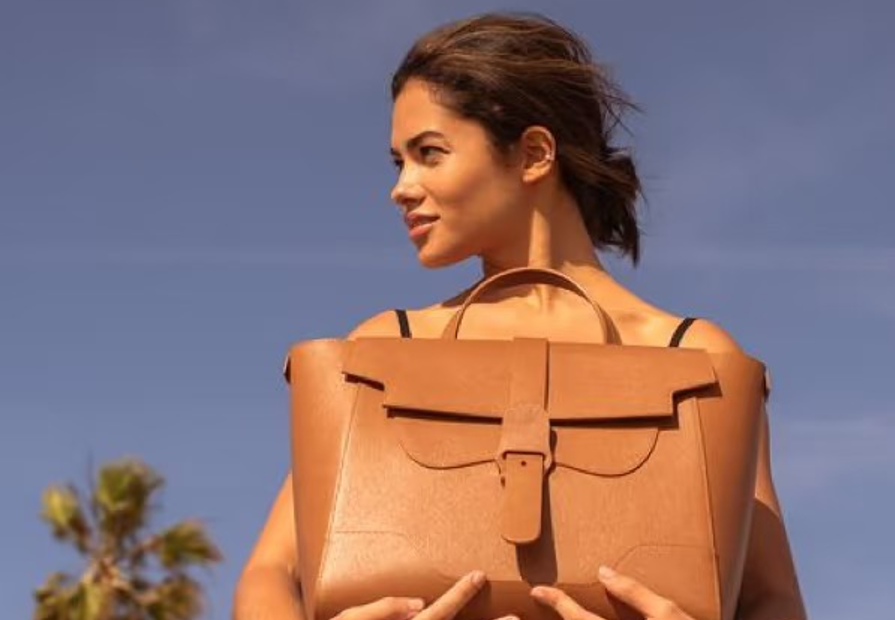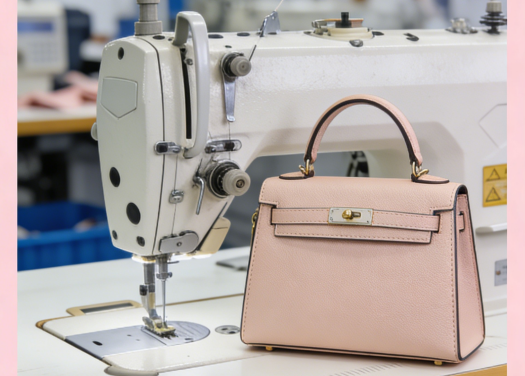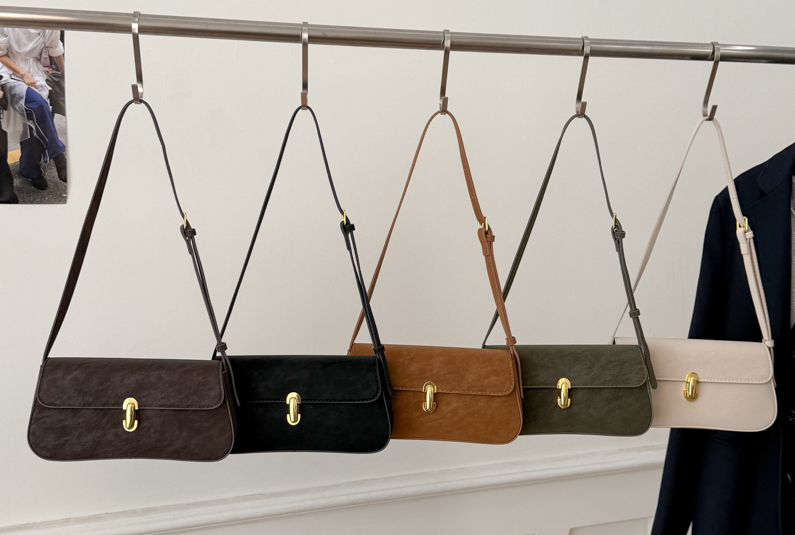

Once the sample has been approved, the journey into mass production begins. This phase is broken down into several key steps:
Bulk Material Procurement and Quality Inspection
Sourcing the materials needed for production in large quantities, followed by a thorough quality check to ensure consistency and meet the design specifications.
Material Preparation and Cutting
This involves cutting the materials to size, applying adhesives where necessary, and preparing the edges for a clean finish with processes like oiling and adding some hardware.
Mid-Production Quality Check
A critical stage to identify and rectify any issues before they become more costly to fix later in the process.
Sewing and Assembly
This is where the handbag comes together, with a series of detailed steps including:
- Sewing lining
- Sewing on labels and tags
- Adding structural elements like boning
- Attaching front pockets and flaps
- Sewing velcro
- Finishing edges with binding
- Attaching cover pieces
- Sewing side pockets and back straps
- Installing zippers and buttons
Final Quality Inspection
The last checkpoint to ensure that each handbag meets the highest quality standards before packaging.
Packaging and Shipping
The final stage, where handbags are carefully packaged to protect them during transit and then shipped to retailers or directly to consumers.
Conclusion
The production process of handbags and purses is a testament to the dedication and skill of those in the fashion industry. From the initial design to the final product, each step is a careful balance of artistry and precision. Understanding this process not only sheds light on the hard work behind the scenes but also adds a deeper appreciation for the handbags and purses we carry every day.