The Ultimate Guide: 7 Ways on How to Wear a Crossbody Bag
2026年2月12日
The Anatomy of a Perfect Crossbody Bag: What to Look For
2026年2月24日How to Build Your Own Purse: A Complete Guide from Dream to Reality
The allure of a perfect handbag is undeniable. It’s more than just an accessory; it’s a statement, a companion, a piece of functional art. For many aspiring designers and entrepreneurs, the ultimate dream is not just to own that perfect bag, but to create it. The phrase “build your own purse” often conjures images of a weekend DIY project, but for the visionary, it signifies something much grander: the birth of a brand.
This guide is for that visionary. It’s for the entrepreneur ready to move beyond a simple idea and into the exciting world of professional handbag manufacturing. We will demystify the entire process, transforming your unique concept into a tangible, market-ready product. Whether you aim to create your own handbag line from scratch or develop a signature piece for your existing brand, this comprehensive walkthrough will serve as your roadmap.
We’ll journey through the five critical phases of creation: conceptualization and design, material and hardware selection, branding and logo application, prototyping and sampling, and finally, full-scale production and quality control. By the end, you’ll have a clear understanding of the steps, decisions, and partnerships required to bring your masterpiece to life.
Phase 1: The Blueprint – Conceptualization and Design
Before a single piece of material is cut, your handbag must exist as a fully-formed idea. This initial phase is the foundation upon which your entire project is built. A strong concept and a detailed technical design are the most critical assets you can bring to a manufacturer.
Defining Your Brand Identity and Target Audience
Who is your bag for? This question must be answered before you sketch a single line. A bag designed for a college student carrying a laptop and books will be fundamentally different from a clutch designed for a high-fashion gala.
- Target Audience: Define your ideal customer. Are they eco-conscious millennials, luxury connoisseurs, working professionals, or trend-focused teens? Your audience will dictate everything from material choice to price point.
- Brand Story: What is the narrative behind your brand? Is it about sustainable craftsmanship, urban functionality, minimalist elegance, or bold artistic expression? Your brand’s story will infuse your product with an identity that resonates with customers.
- Unique Selling Proposition (USP): What makes your handbag different from the thousands already on the market? Is it a revolutionary new feature, an exceptionally rare material, a commitment to ethical production, or a truly unique aesthetic?
- Mood Board: Create a visual collection of images, textures, colors, and hardware that captures the feeling of your brand. This powerful tool helps communicate your abstract ideas to designers and manufacturers, ensuring everyone shares the same vision.
Sketching Your Vision: From Idea to Paper
With a clear identity in mind, you can begin the design process. This is where your vision starts to take a physical form.
- Initial Sketches: You don’t need to be a professional artist. Simple hand-drawn sketches are perfect for exploring shapes, proportions, and features. Focus on the silhouette, strap design, pocket placement, and overall functionality.
- Digital Renderings: For a more refined look, Computer-Aided Design (CAD) software can create detailed 2D or 3D models of your bag. These renderings are invaluable for visualizing the final product and are often used in marketing materials even before the first sample is made.
The Holy Grail: Creating a Technical Pack (Tech Pack)
If your design sketch is the dream, the tech pack is the instruction manual to build it. This is arguably the most important document in the entire manufacturing process. A detailed tech pack eliminates ambiguity, reduces errors, and ensures that the sample you receive is exactly what you envisioned. As explained by industry platforms like Techpacker, a thorough tech pack is the key to successful production. Need inspiration for bag designs? Visit our product catalog.
A comprehensive tech pack should include:
- Detailed Illustrations: Flat drawings of the bag from every angle (front, back, sides, top, bottom, and interior).
- Precise Measurements: Every dimension should be clearly listed in centimeters or inches, including the bag’s height, width, depth, strap length and drop, and pocket sizes.
- Material Specifications: List every material used. Be specific: “1.2mm thick, full-grain cowhide leather, black” is much better than “black leather.” Include details for the main body, lining, and any accents.
- Hardware Details: Specify the type, material, finish, and size for every piece of hardware (zippers, clasps, buckles, studs, D-rings). For example: “YKK #5 zipper, antique brass finish, with custom logo puller.”
- Color Information: Use a universal color system like Pantone (e.g., Pantone 19-4052 Classic Blue) for the exterior, lining, and even stitching to guarantee color accuracy.
- Stitching Instructions: Detail the stitch type, color, and stitches per inch (SPI). This affects both the look and durability of the bag.
- Logo Placement: A precise diagram showing the exact location and dimensions of your logo.
You can refer to our article For the types of bags.
Phase 2: The Building Blocks – Materials and Hardware
The materials and hardware you choose are the physical embodiment of your brand. They dictate the bag’s quality, durability, feel, and price point. A thoughtful selection can elevate a good design into a truly exceptional product. Know more about Custom Process
Choosing the Perfect Core Material
The primary material defines the character of your handbag.
- Leathers: The classic choice, known for its durability and graceful aging.
- Full-Grain: The highest quality layer of the hide, showcasing natural imperfections. It’s incredibly durable and develops a beautiful patina over time.
- Top-Grain: The second-highest quality, where the surface has been sanded to remove imperfections, resulting in a more uniform look.
- Suede: Created from the underside of the hide, giving it a soft, napped finish. Luxurious but requires more care.
- Vegan & Sustainable Options: The demand for ethical and eco-friendly products is growing rapidly.
- PU (Polyurethane) Leather: A high-quality synthetic that closely mimics the feel and look of real leather. It’s lighter, less expensive, and can be produced in a vast array of colors and textures.
- Recycled Fabrics: Materials made from recycled plastics (rPET) or textiles are excellent for brands with a sustainability focus.
- Plant-Based Leathers: Innovative materials like Piñatex (from pineapple leaves), apple leather, and mushroom leather are gaining traction as premium, sustainable alternatives. You can learn more about the push for sustainable materials from sources like the Ellen MacArthur Foundation.
- Fabrics:
- Canvas: Durable, lightweight, and casual. Perfect for totes and everyday bags.
- Nylon: Strong, water-resistant, and lightweight, making it ideal for travel bags, backpacks, and functional purses.
- Denim & Jacquard: Offer unique textures and patterns for statement pieces.
The Hardware: The Jewelry of Your Handbag
Hardware is a critical detail that can significantly impact the perceived value of your product. High-quality hardware functions smoothly and adds a touch of luxury.
- Functionality: Choose zippers, clasps, locks, and buckles that are not only beautiful but also easy to use and built to last. Brands like YKK are renowned for their durable zippers.
- Material & Finish: The most common materials are zinc alloy and solid brass. Finishes range from polished gold and nickel (silver) to antique brass and matte black. The finish should complement your core material and brand aesthetic.
- Customization: Many manufacturers can create custom hardware, such as zipper pullers or clasps featuring your brand’s logo, for a truly bespoke touch.

Phase 3: The Signature – Branding and Logo Application
Your logo transforms your product from a simple handbag into a piece of your brand. The method you choose to apply it should align with your bag’s design and price point.
A Deep Dive into Logo Application Techniques
Each technique offers a different aesthetic and comes with its own set of considerations.
- Embossing & Debossing: A logo is pressed into the material (typically leather) to create a raised (embossed) or sunken (debossed) effect. This method is subtle, sophisticated, and timeless.
- Hot Stamping (Foil): A heated die is used to press a sheet of metallic or colored foil onto the surface. It’s perfect for adding a touch of metallic elegance and is a classic choice for luxury goods.
- Silkscreen Printing: Ink is passed through a mesh screen onto the fabric. This is a versatile and cost-effective method for printing logos with multiple colors, ideal for canvas or nylon bags.
- Embroidery: A logo is stitched onto the bag using thread. This adds texture, color, and a handcrafted feel, working well on fabric-based designs.
- Metal Plate/Hardware Logos: A custom-molded metal logo is attached to the bag. This is a premium option that signals high quality and is common on designer handbags.
- TPU/Rubber Patches: These offer a modern, durable, and often sporty look, perfect for contemporary or athleisure-inspired brands.
When you make your own purse line, the logo application is a key decision. Discuss the options with your manufacturer, as different techniques have varying costs and Minimum Order Quantity (MOQ) requirements.
Phase 4: The Reality Check – Prototyping and Sampling
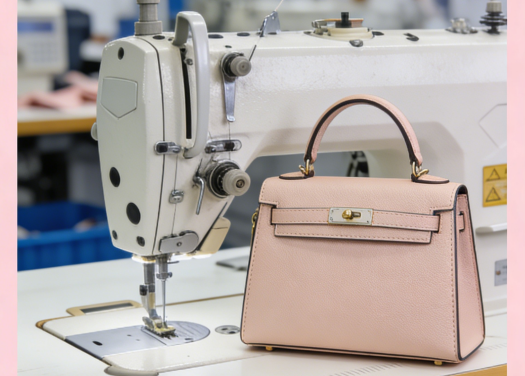
This is the most exciting phase, where your digital designs and material selections become a physical object. The sampling process is a crucial quality-assurance step that should never be skipped.
The Mock-Up: Your First Visual Confirmation
Before creating a full sample, many manufacturers provide a digital or paper mock-up. This helps confirm the scale, proportions, and placement of key features like logos and pockets before committing expensive materials and labor.
The Pre-Production Sample: Holding Your Creation
The physical sample is your chance to test everything.
- Evaluate Quality: Inspect the stitching, material quality, hardware function, and overall craftsmanship.
- Test Functionality: Wear the bag. Fill it with everyday items. Does the strap feel comfortable? Are the pockets easy to access? Does the clasp close securely?
- Provide Feedback: This is not a one-shot process. Provide your manufacturer with clear, consolidated feedback for any necessary revisions. Use photos and specific notes to illustrate your points. The goal is to perfect the sample before moving forward.
Getting this step right is essential to successfully make your own bag collection. A flawless final sample is the “golden standard” that the bulk production will be measured against.
Phase 5: The Final Act – Production and Quality Control
Once you have approved the final pre-production sample, it’s time to begin manufacturing your order.
Moving from Sample to Bulk Production
After your final approval and deposit, the manufacturer will begin sourcing all the materials in bulk and setting up the production line. Be sure to confirm the production lead time, which can range from a few weeks to several months depending on the complexity of your design and the quantity ordered.
The Unwavering Importance of Quality Control (QC)
Consistency is key. A reputable manufacturer will have a robust Quality Control process to ensure that the 100th bag is just as perfect as the first. This process includes:
- Material Inspection: Checking all incoming materials to ensure they match the approved sample.
- In-Line Inspection: Spot-checking bags at various stages of the assembly line to catch any errors early.
- Final Inspection: A thorough check of every finished unit, examining stitching, hardware, dimensions, and cleanliness before packing.
This rigorous attention to detail is what separates professional manufacturing from a simple hobby project and is the ultimate guarantee of quality when you build your own purse line.

Partnering with the Right Manufacturer
The journey to build your own purse brand is a collaborative one, and your most important partner is your manufacturer. Look for a partner who offers not just production capabilities, but also expertise, transparent communication, and a genuine commitment to bringing your vision to life. An experienced manufacturer acts as a guide, helping you navigate material choices, optimize your design for production, and solve challenges along the way.
What is the typical Minimum Order Quantity (MOQ) to create my own handbag?
MOQs vary greatly depending on the manufacturer and the complexity of the design. For fully custom designs, it can range from 50 to 500 pieces per style/color. Simpler designs or those using stock materials may have lower MOQs.
How long does the entire process take, from design to delivery?
A typical timeline is 1-2 months. This includes 15 days for finalizing the design and sampling, and 1-2 months for bulk production and shipping. Complex designs or custom materials can extend this timeline.
Can I provide my own materials or hardware?
B.S. Bag Factory allows clients to supply their own materials (known as CMT production), but many prefer to source everything themselves to control quality and streamline the process. Always discuss this possibility upfront.
How much does it cost to develop a sample?
Sample costs can range from $100 to over $500, depending on the bag’s complexity. This cost covers the materials and the highly skilled labor required for a single unit. Often, this fee is credited back to you if you proceed with a bulk production order.
What’s the difference between OEM and ODM manufacturing?
OEM (Original Equipment Manufacturer) means the manufacturer produces a design that you provide (your own unique tech pack). ODM (Original Design Manufacturer) means you select and modify a pre-existing design from the manufacturer’s catalog and brand it as your own.
Start Your Journey Today
Creating a handbag line is a journey of passion, precision, and partnership. You have the vision; the next step is to find the right team to help you execute it. Don’t let the complexities of the process deter you from achieving your dream.
Ready to bring your vision to life? Contact us today to discuss your project with our team of experts. We’re here to help you build the handbag you’ve always imagined.